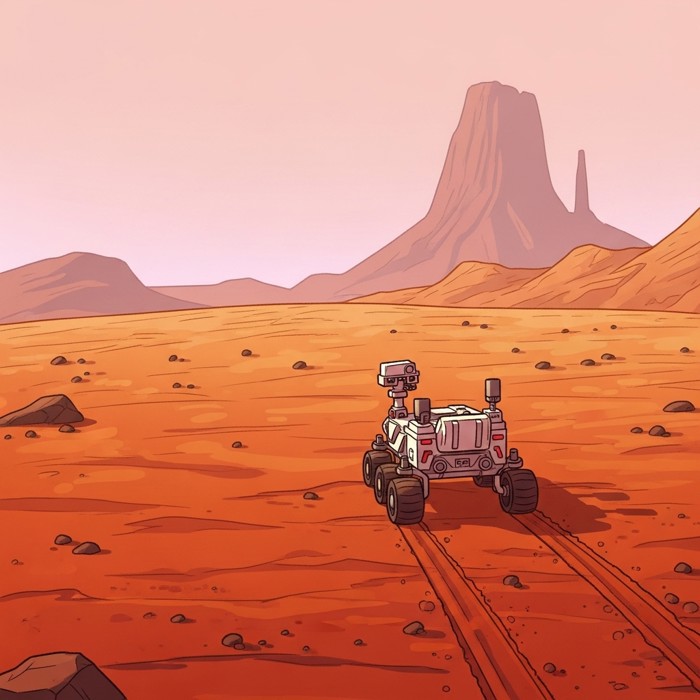
Five Things We Know About Mars
11 Aug, 2026
Cấp độ: Trung cấp
Tổng số từ vựng: 140
Số phút để đọc: 1
Chủ đề: Space
Bạn có thể nhấn vào nút Chơi game và khám phá bên dưới để tìm hiểu thêm nhiều kiến thức thú vị khác nhé.
Scientists have studied Mars more than any other planet beyond Earth.
Mars is our closest neighbor in space, and we are learning more about it every year.
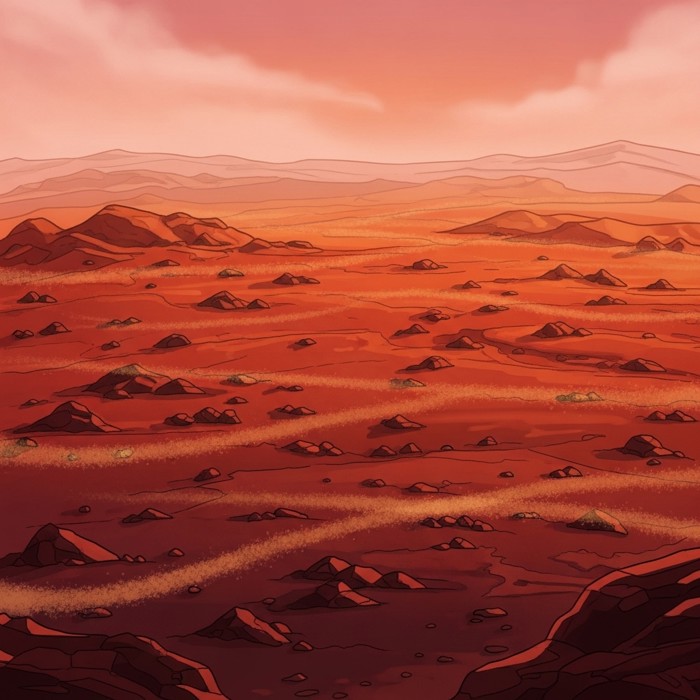
First, Mars looks red because its surface is covered in iron oxide, which is also known as rust.
A sweeping aerial view of the Martian landscape bathed in deep crimson and burnt orange tones, fine rust-coloured dust swirling in thin wisps across a barren rocky plain under a hazy pink sky
This red dust gives Mars its famous nickname, the Red Planet.
Second, Mars is home to Olympus Mons, the tallest volcano in the entire solar system.
Olympus Mons is about three times the height of Mount Everest.
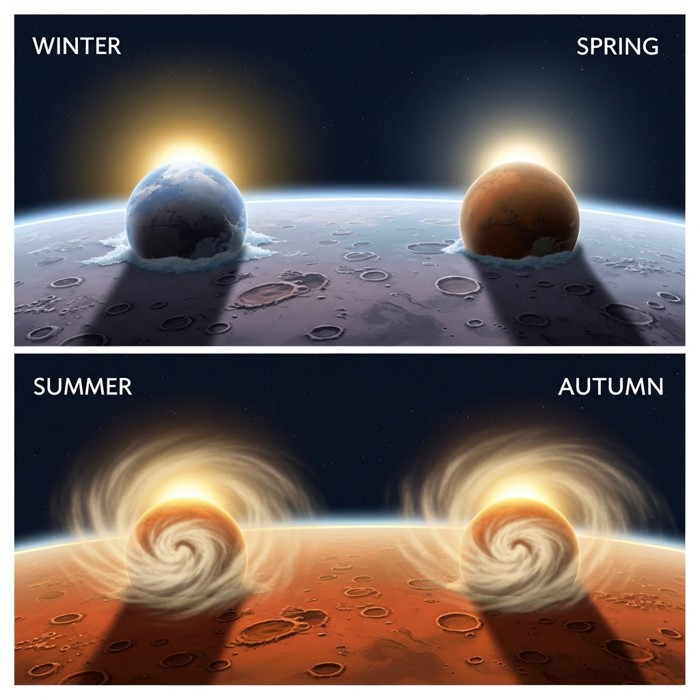
Third, Mars has four seasons , just like Earth, because it tilts on its axis in a similar way.
A split-panel illustration of Mars through its four seasons — frost-dusted polar caps expanding and shrinking, dust storms sweeping reddish plains, and sunlight shifting across the cratered terrain over two Earth-years
However, each season on Mars lasts about twice as long as a season on Earth.
Fourth, scientists have found strong evidence that liquid water once flowed across the surface of Mars.
Today, water exists on Mars as ice at the poles and possibly underground.
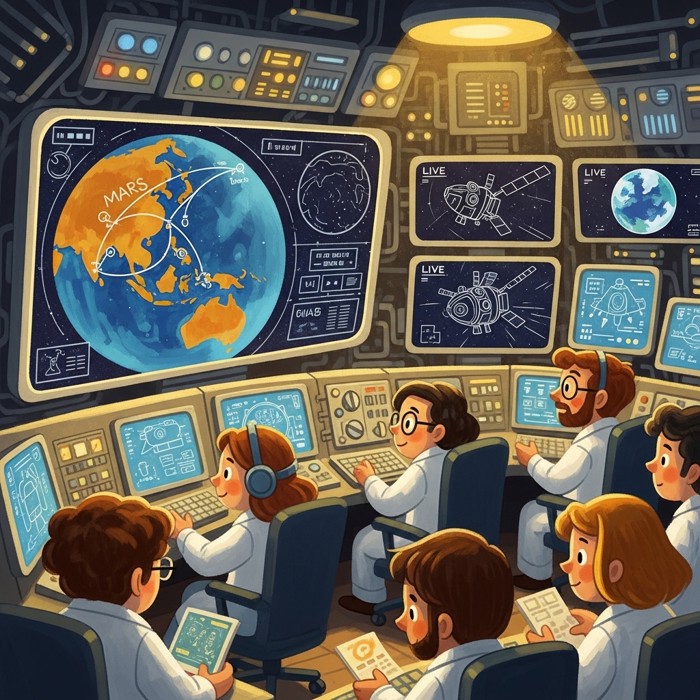
Fifth, Mars may one day become home to human explorers .
A bustling mission control room filled with scientists and engineers watching live feeds of a crewed spacecraft leaving Earth's orbit, a detailed map of the Mars trajectory glowing on the main screen
Space agencies around the world are working on plans to send people to Mars.
They hope to achieve this goal within the next few decades.
A journey to Mars would take about seven months using today's technology .
Understanding Mars helps us learn more about how planets form and whether life can exist beyond Earth.
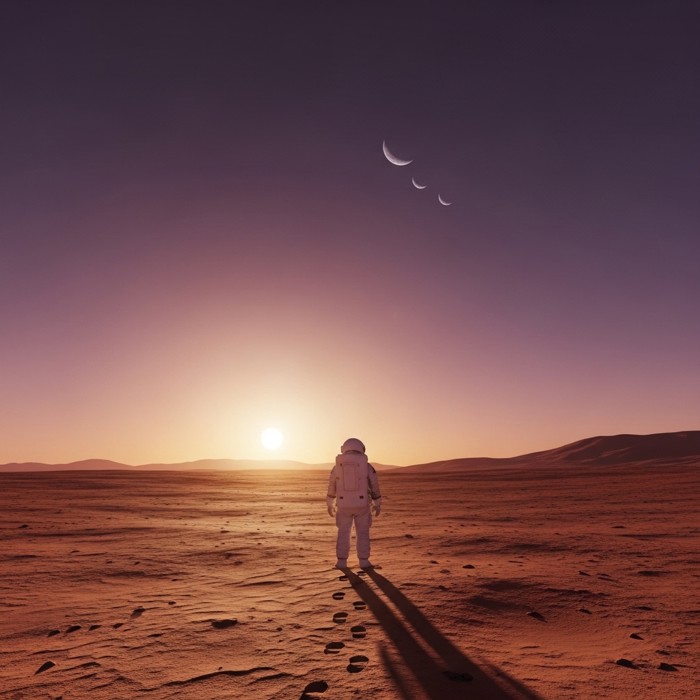
An astronaut in a white spacesuit standing alone on the Martian surface at sunset, gazing up at two small moons rising above the horizon as the sky fades from dusty pink to deep violet, footprints trailing behind in the red soil
The more we explore Mars, the more questions we discover.