Looking Up With Better Questions
11 Aug, 2026
Cấp độ: Trung cấp
Tổng số từ vựng: 135
Số phút để đọc: 1
Chủ đề: Space
Bạn có thể nhấn vào nút Chơi game và khám phá bên dưới để tìm hiểu thêm nhiều kiến thức thú vị khác nhé.
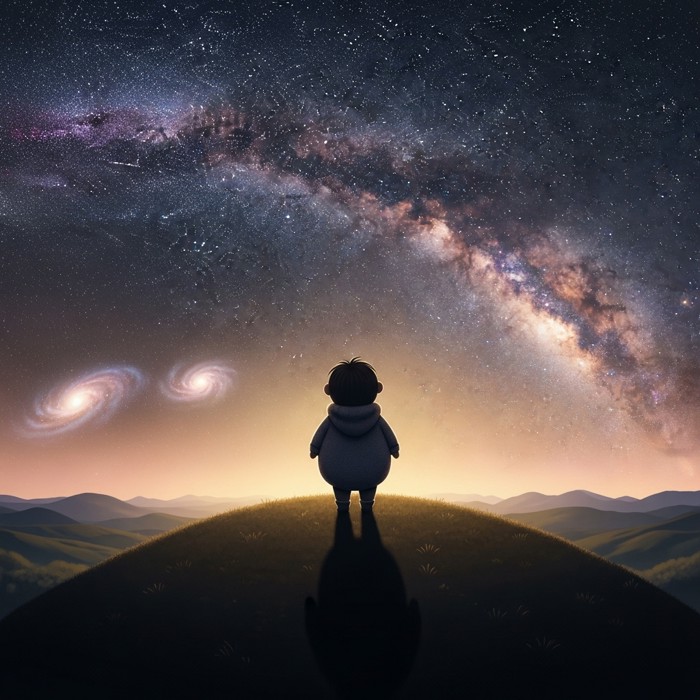
Have you ever looked up at the night sky and wondered what is really out there?
Asking questions about space has always been one of the most human things we do.
For centuries , people only asked simple questions, like how many stars exist.
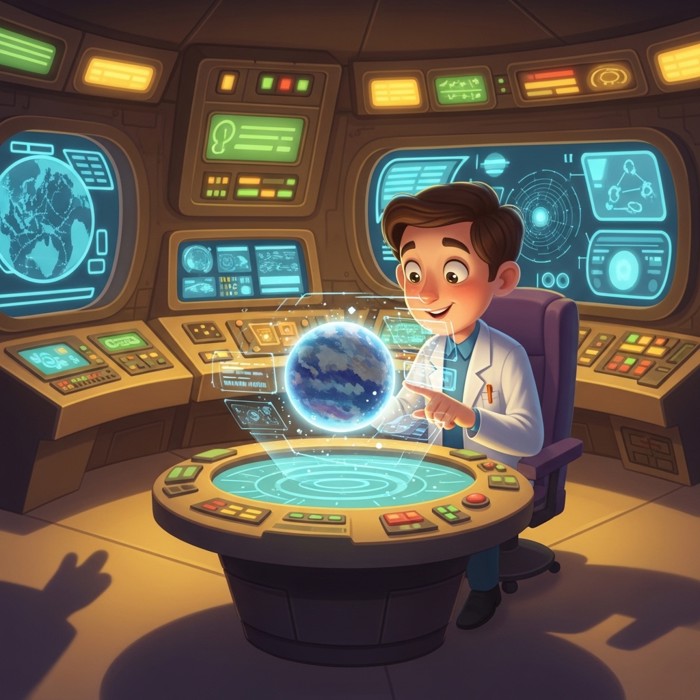
A scientist in a control room studying a glowing holographic model of a distant planet, searching the data for signs it could support life
Now, scientists ask much deeper questions, like whether other planets can support life.
Better questions lead to better tools and more powerful telescopes.
The James Webb Space Telescope was built because scientists asked what the universe looked like billions of years ago.
When researchers asked how black holes form, they began discovering new physics.
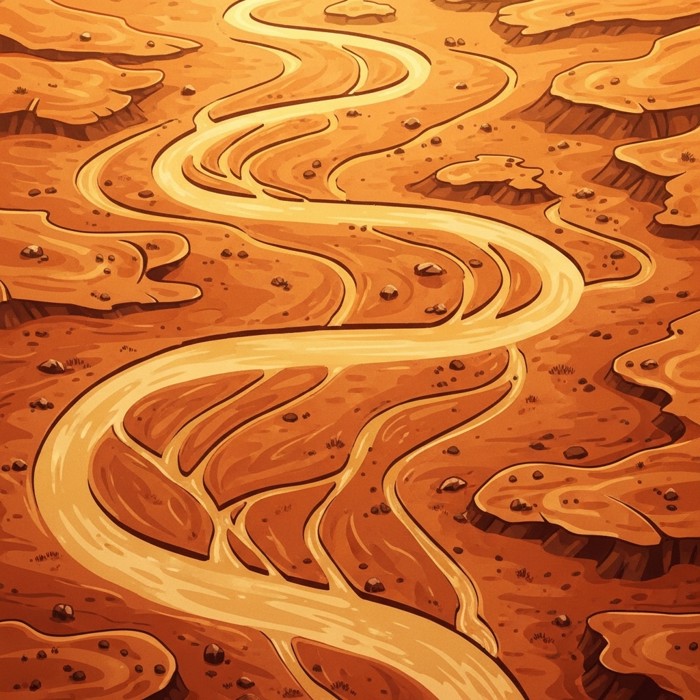
A close-up aerial view of dry, winding riverbed channels carved into the rust-colored Martian surface, hinting at water that once flowed there
Asking about Mars led to the discovery of ancient riverbeds and possible signs of water.
Each new question opens a door that was not visible before.
Young students who ask "why" in class often grow up to become the scientists of tomorrow.
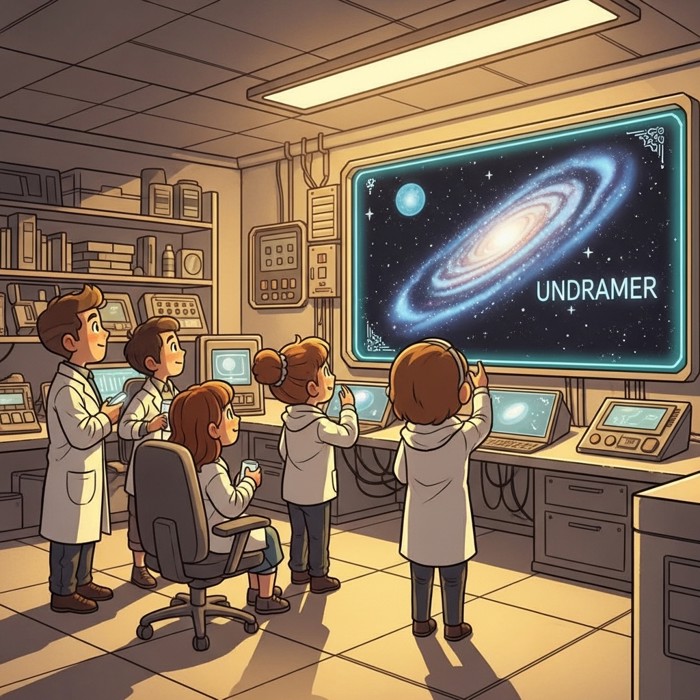
Space agencies around the world now encourage public questions to help shape future missions .
A group of young researchers in a futuristic lab looking hopefully toward a giant screen displaying an unexplored, unnamed galaxy far in the distance
Even questions that seem impossible today may guide the discoveries of the next generation .
The quality of our future in space depends on the quality of the questions we ask now.
So the next time you look up, do not just wonder - ask something specific.