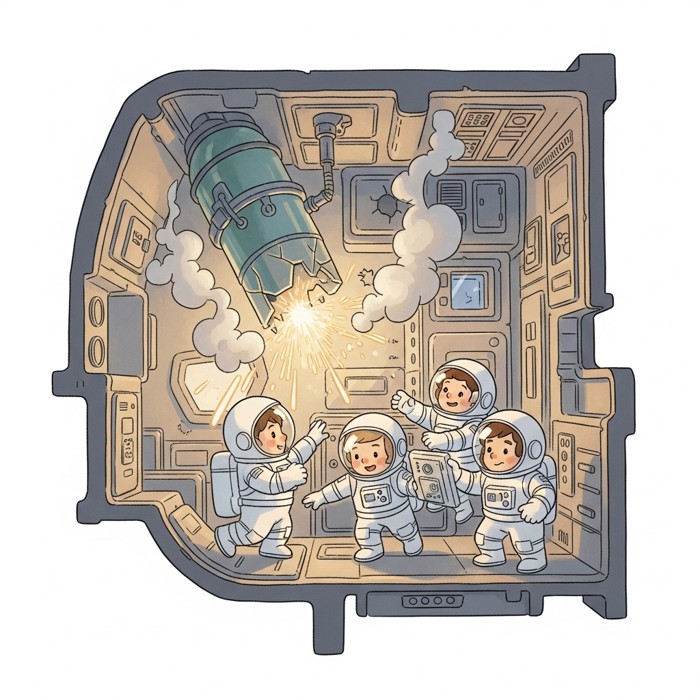
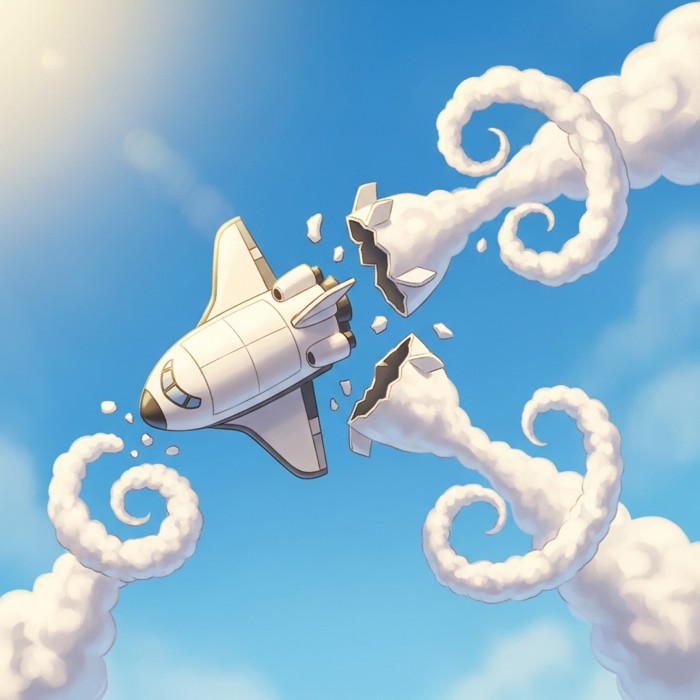
Space exploration is one of humanity's greatest adventures, but sometimes things go terribly wrong. When a mission fails, scientists and engineers must work quickly to understand what happened. In 1970, the Apollo 13 spacecraft developed a serious problem on its way to the Moon. An oxygen tank exploded, and the three astronauts on board were suddenly in danger. Mission controllers on Earth worked day and night to bring the crew home safely. After several tense days, the astronauts returned to Earth without serious injury. The Challenger space shuttle disaster in 1986 had a very different outcome . The shuttle broke apart just 73 seconds after launching, killing all seven crew members.
In 1999, the Mars Climate Orbiter was lost because two teams used different measurement units. One team used metric units and the other used imperial units, causing the spacecraft to crash. These failures taught space agencies many important lessons about safety and communication. Engineers now run thousands of tests before any rocket leaves the ground.
Every space mission that goes wrong helps scientists build better and safer spacecraft . Failure in space exploration is painful, but it has always pushed humanity to reach higher.