Why Rockets Need So Much Power
11 Aug, 2026
Cấp độ: Trung cấp
Tổng số từ vựng: 110
Số phút để đọc: 1
Chủ đề: Space
Bạn có thể nhấn vào nút Chơi game và khám phá bên dưới để tìm hiểu thêm nhiều kiến thức thú vị khác nhé.
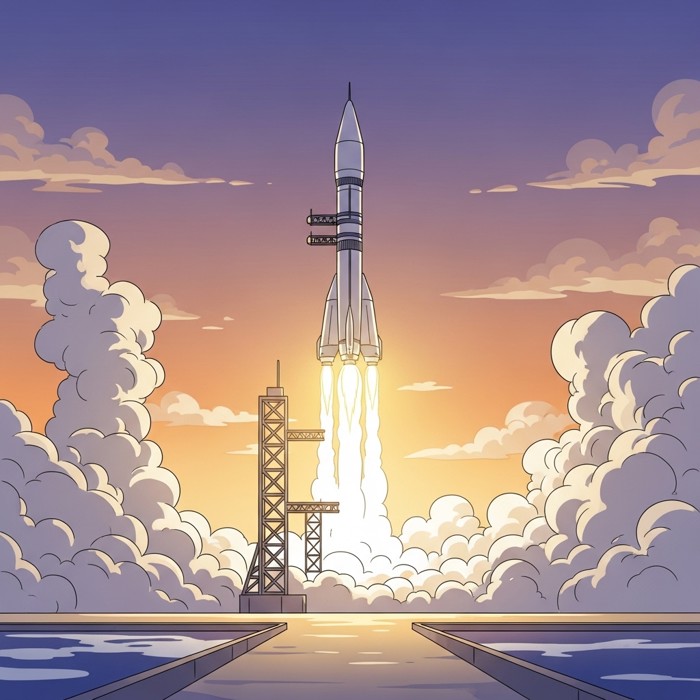
Launching a rocket into space is one of the most powerful things humans have ever done.
A rocket must travel at least 11 kilometers per second to escape Earth's gravity .
Gravity pulls everything toward the ground with great force.
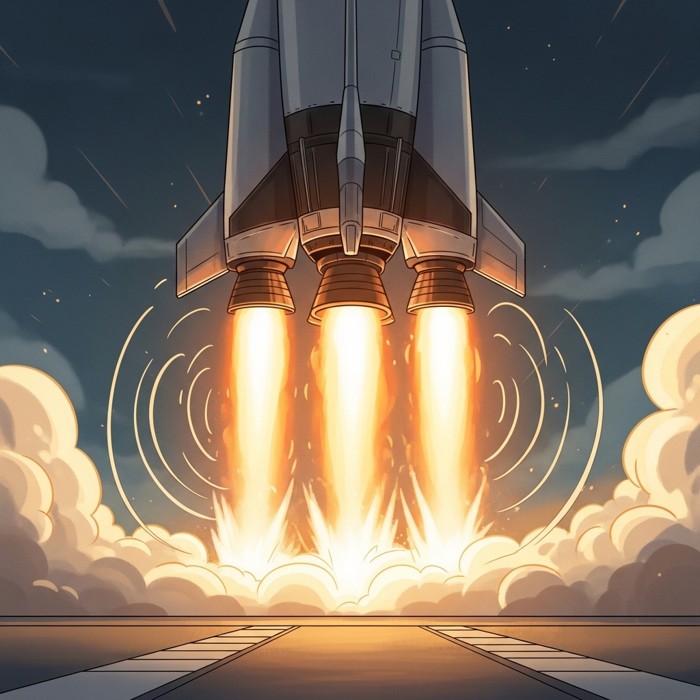
A dramatic close-up of a rocket's base as its engines ignite, releasing a violent burst of orange flame and rippling shockwaves that lift the massive vehicle off the launch pad.
To overcome gravity , a rocket must produce an enormous amount of thrust .
Thrust is the pushing force that moves a rocket upward.
Rockets burn huge amounts of fuel to create this force.
Most of a rocket's weight at launch is fuel , not the spacecraft itself.
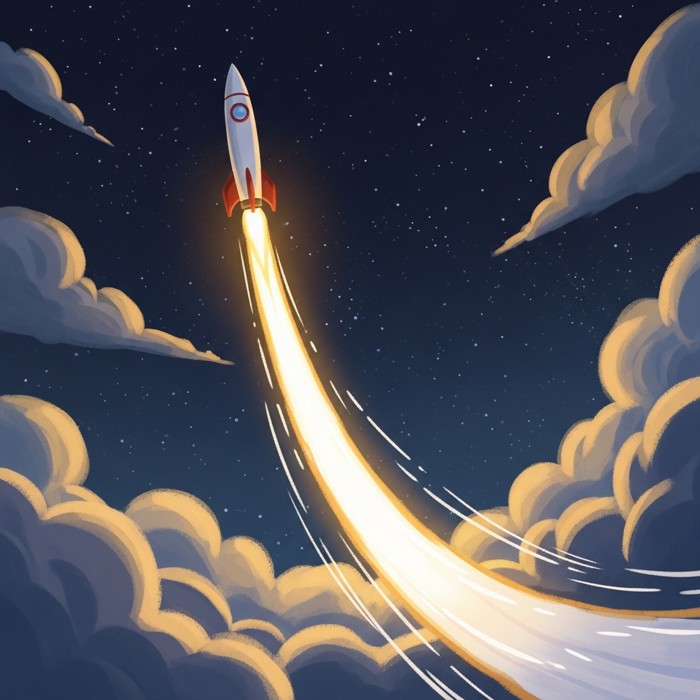
A rocket streaking upward through a darkening sky, its bright exhaust trail growing thinner and its path curving faster as it sheds weight and gains speed.
As the rocket burns fuel , it becomes lighter and can move faster.
Rockets also have to push through Earth's thick atmosphere .
The air creates resistance , called drag , which slows the rocket down.
Engineers design rockets in separate stages to solve this problem.
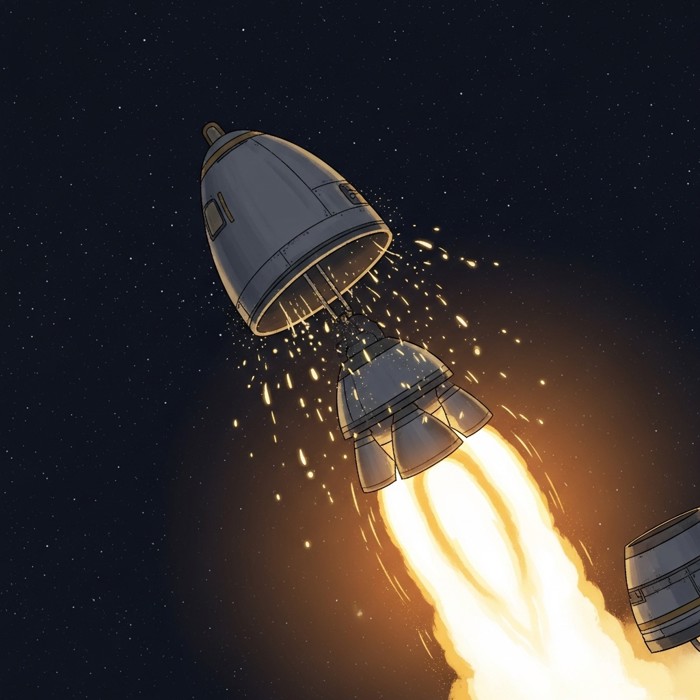
A dramatic scene of a spent rocket stage tumbling away into the dark sky in a shower of sparks, just as the next stage's engine bursts into a brilliant flash of flame.
When one stage runs out of fuel , it falls away and the next stage fires.
A single rocket engine can produce more power than several nuclear power plants.
Without this enormous power, humans could never explore beyond our own planet.