
What Students Need From Feedback
- English level
- Level 2
- Topic
- Education
- Estimated reading time
- 2 mins

Many students receive feedback, but few know how to use it.
Feedback is one of the most powerful tools in education, yet it is often misunderstood.
When a teacher writes "good job," the student feels happy but learns nothing new.
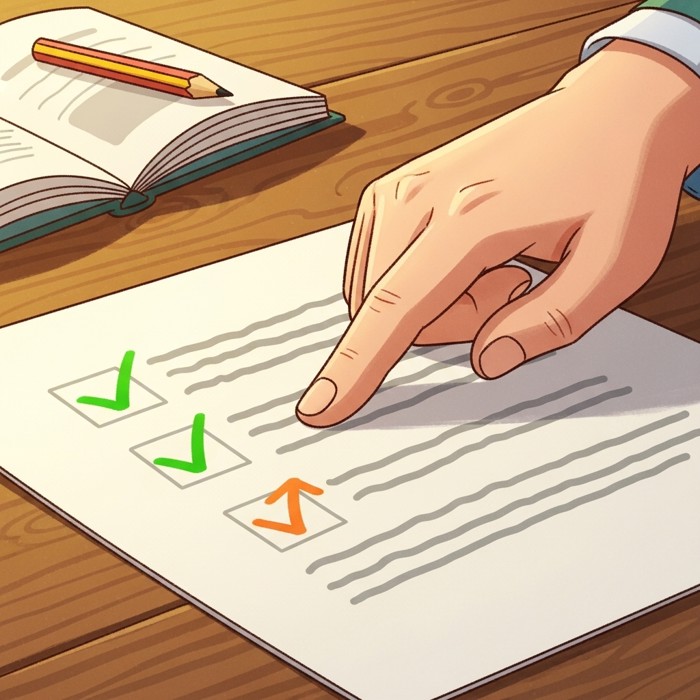
Effective feedback must tell students exactly what they did well and what they need to improve.
Research shows that specific feedback helps students grow much faster than general comments.
The timing of feedback also matters greatly in the learning process.
Students benefit most when they receive feedback shortly after completing a task.

If feedback arrives too late, students have already moved on and [cannot] connect the comments to their work.
Feedback should also use a positive and respectful tone so students feel encouraged to keep trying.
When feedback sounds harsh or critical, students may feel defeated and stop putting in effort.
Good feedback gives students a clear next step, so they know exactly what to do differently.

Students also need opportunities to respond to feedback, ask questions, and reflect on their progress.
When students play an active role in the feedback process, they develop stronger learning habits.
Teachers who give meaningful feedback create classrooms where students feel safe to make mistakes and grow.
Feedback is not just about grades - it is about helping every student reach their full potential.
Key Vocabulary
 Defeated (adj) To overcome in battle or contest.UK: dɪˈfiːtɪdUS: dɪˈfiːtɪdLearn more
 Effort (n) A vigorous or determined attempt.UK: ˈefətUS: ˈefərtLearn more
 Meaningful (adj) Having a serious, important, or useful quality or purposeUK: /ˈmiːnɪŋfʊl/US: /ˈmiːnɪŋfəl/Learn more
 Opportunities (n) A time or set of circumstances that makes it possible to do something.UK: ˌɒpəˈtjuːnɪtizUS: ˌɑpərˈtunətizLearn more
 Potential (adj) Having or showing the capacity to develop into something in the future.UK: pəˈtenʃlUS: pəˈtenʃlLearn more
 Reflect (v) (of a surface or body) throw back (heat, light, or sound) without absorbing it.UK: rɪˈflektUS: rɪˈflektLearn more
 Specific (adj) Clearly defined or identified.UK: spəˈsɪfɪkUS: spəˈsɪfɪkLearn more
 Timing (n) The act of choosing the best moment to do something or the speed at which something happensUK: /ˈtaɪmɪŋ/US: /ˈtaɪmɪŋ/Learn more

Practice This Story
Continue learning with Ettip's stories and vocabulary challenges.
More English Stories About Education

How Good Teachers Change Learning
A great teacher can change the way a student sees the world. Good teachers do more than share facts - they help students grow as people. They make lessons interesting so that students want to learn mo...

Why Students Need Clear Goals
Many students spend hours studying but still feel lost. Without clear goals, hard work often leads nowhere. A clear goal tells you exactly what you want to achieve and when you want to achieve it. Goa...

A Day in a Modern Classroom
Today's classrooms look nothing like they did twenty years ago. Modern technology has completely changed the way students learn and teachers teach. Students now use tablets and laptops instead of heav...

Five Study Habits That Actually Work
Many students study for hours but still do not get good results. The problem is not how much you study, but how you study. Five simple habits can make a real difference in your learning. The first hab...

How Online Lessons Help Busy Learners
Many people feel they never have enough time to learn something new. Online lessons have changed that completely. Today, anyone with a phone or computer can study at any time of day. You do not need t...

How Reading Builds Better Thinking
Reading is one of the most powerful tools for building a better mind. Many people do not realise how much their thinking improves every time they open a book. When you read, your brain works hard to u...

The Role of Mistakes in Learning
Many people feel ashamed when they make a mistake. However, mistakes are actually one of the most powerful tools for learning. When you make an error, your brain works harder to understand what went w...
What Makes a School Feel Safe?
Many students say they learn best when they feel safe at school. Safety is not only about locked doors or security cameras. A safe school starts with teachers who listen and care about their students....

When Homework Helps and When It Hurts
Many students spend hours every night doing homework, but does all that work actually help them learn? Homework has been a part of school life for generations, yet experts still disagree about its val...
Why Questions Improve Every Class
Most students remember the classes where they asked the most questions. Questions make learning more active and more meaningful for everyone. When a student asks a question, they show that they are th...