Why Screens Shape Our Attention
11 Aug, 2026
Cấp độ: Trung cấp
Tổng số từ vựng: 137
Số phút để đọc: 1
Chủ đề: Information Technology
Bạn có thể nhấn vào nút Chơi game và khám phá bên dưới để tìm hiểu thêm nhiều kiến thức thú vị khác nhé.
Every day, the average person spends more than seven hours looking at a screen .
This much screen time is changing the way our brains pay attention .
Screens are designed to keep us watching and scrolling for as long as possible.

An app designer sketching glowing notification bubbles and bright colorful buttons on a digital tablet, vivid neon workspace illustration
App designers use bright colors, sounds, and notifications to hold our focus.
When we get a like or a new message, our brain releases a chemical called dopamine .
Dopamine makes us feel good, so we keep checking our phones for that feeling.
Over time, this habit trains our brain to expect constant stimulation .
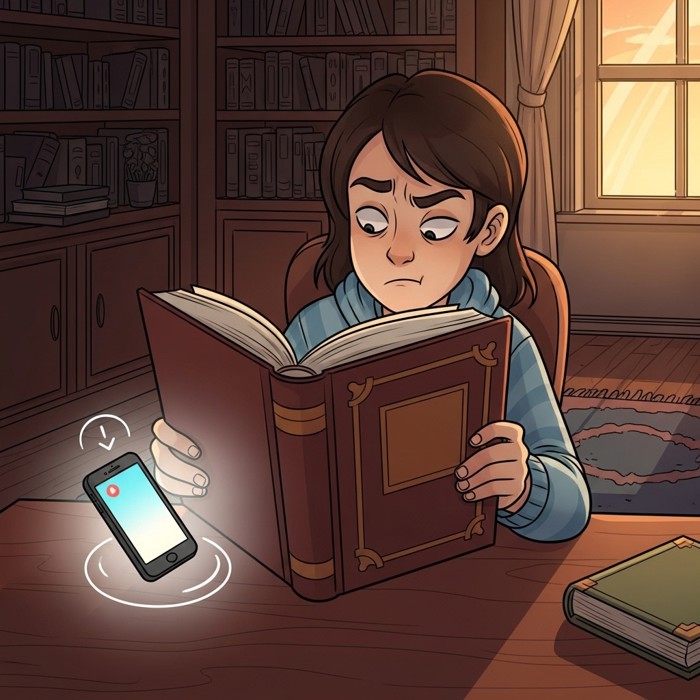
A person at a desk trying to read a book while a phone vibrates and glows insistently beside them, restless expression, vivid illustration
As a result, sitting quietly with one task becomes harder for many people.
Studies show that the average attention span has become shorter over the past two decades.
Children who spend many hours on screens may find it difficult to focus in school.

Frequent notifications at work interrupt deep thinking and reduce productivity .
A person lying in bed at night, their face lit by cold blue light from a phone screen, wide awake with a glowing moon dimmed in the background
Screens also affect sleep because their blue light tells the brain to stay awake.
However, not all screen time is harmful, as reading and learning online can build skills.
Understanding how screens shape our attention is the first step toward using them more wisely.