
What Astronauts Eat, Wear and Miss in Orbit
- English level
- Level 3
- Topic
- Space
- Estimated reading time
- 3 mins
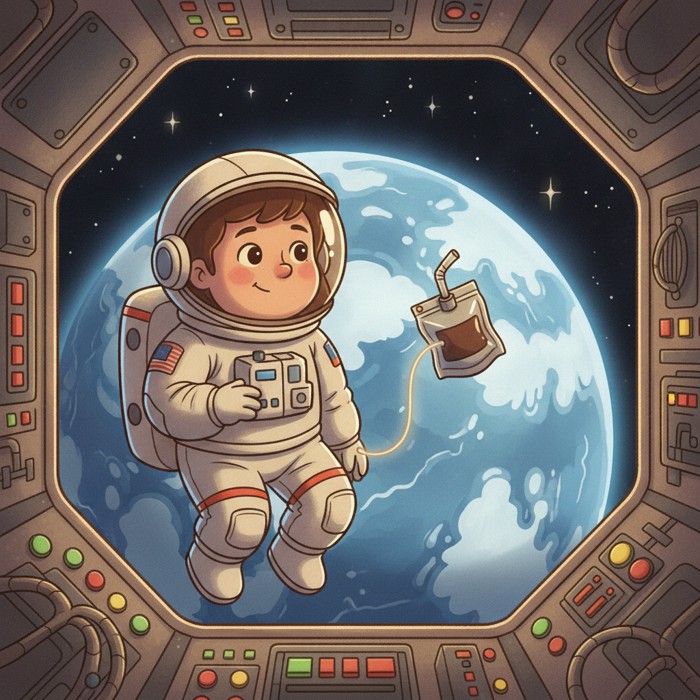
Ask an astronaut what they miss most about [Earth], and the answer is rarely the view; It is usually a smell, a texture, or a food they took for granted.
Life aboard the International Space Station reduces existence to three stubbornly ordinary questions: what to eat, what to wear, and what the body quietly refuses to forget.
Meals arrive freeze-dried or [thermostabilized], rehydrated with a squirt of hot water, since loose crumbs would drift free and lodge in delicate instruments.
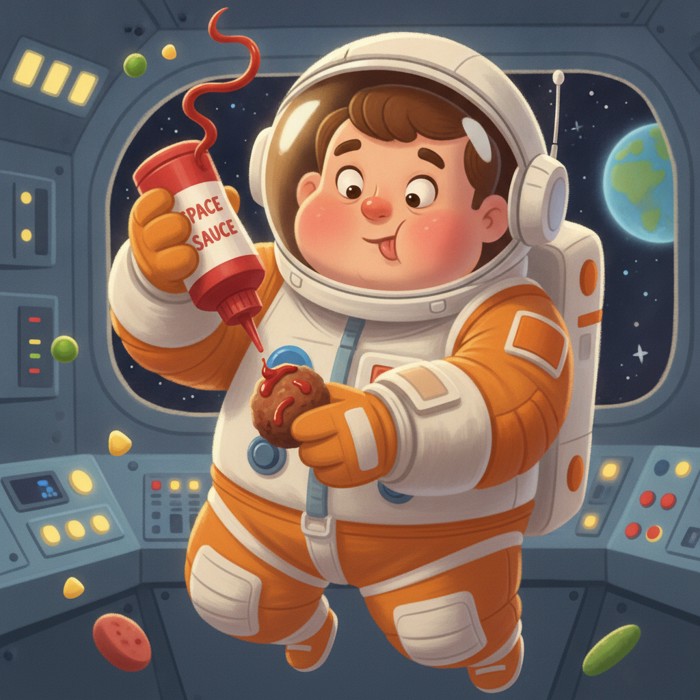
Microgravity dulls both smell and taste by pooling fluid toward the head, which is why so many crew members smother their food in hot sauce.
[NASA] now designs menus around this blunted palate, favoring bold, well-seasoned dishes over the bland comfort food once assumed to suit a queasy stomach.
Clothing gets no such luxury of adaptation, since there is no washing machine on board, so shirts and socks are worn for days before being discarded.
Spacewalk suits demand a different kind of patience, requiring hours of [prebreathing] and fitting before an astronaut can even step outside.
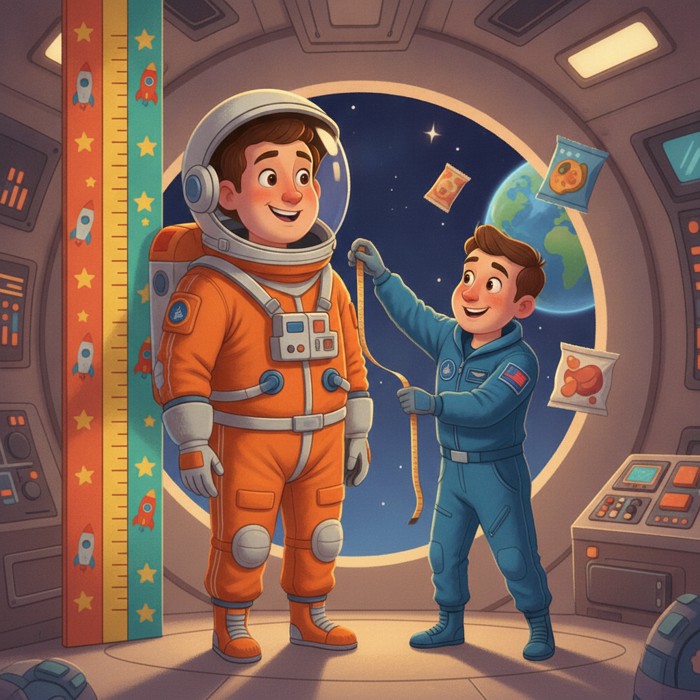
Each suit is custom-tailored, partly because the spine lengthens by several centimeters in microgravity, leaving astronauts measurably taller until gravity reasserts itself.
That same fluid shift rounds out the face into what crew members wryly call moon face, a puffiness that takes weeks to settle after landing.
To offset the muscle and bone loss that weightlessness inflicts, astronauts exercise nearly two hours daily on equipment bolted to the walls and floor.
Astronauts consistently name rain, cut grass, and the smell of their own kitchen as the sensations they miss most acutely.

Some have admitted that gravity itself becomes an object of longing, that dull and unremarkable force that lets a cup simply sit on a table.
It is a strange kind of homesickness, one aimed less at a place than at the ordinary physics that place obeys.
Perhaps that is the quiet lesson orbit teaches: the things we barely notice are usually the things we would miss the most.
Key Vocabulary
 Homesickness (n) A feeling of sadness because you are away from your home and familyUK: /ˈhəʊmsɪknəs/US: /ˈhoʊmsɪknəs/Learn more
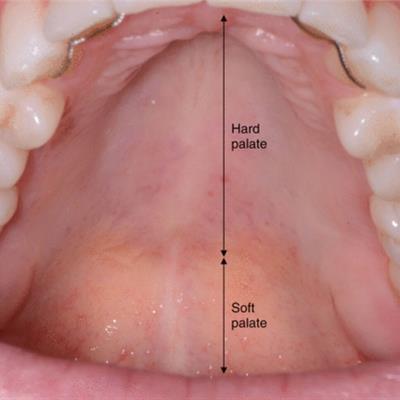 Palate (n) The roof of the mouth, separating the cavities of the mouth and nose in vertebrates.UK: ˈpælətUS: ˈpælətLearn more
 Prebreathing (n) The act of breathing a specific gas, often pure oxygen, for a period before an activity like a diveUK: /ˌpriːˈbriːðɪŋ/US: /ˌpriːˈbriːðɪŋ/Learn more
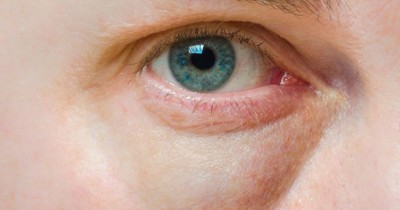 Puffiness (n) The state of being swollen or slightly inflated, often due to fluid retention or an allergic reactionUK: /ˈpʌfɪnəs/US: /ˈpʌfɪnəs/Learn more
 Queasy (adj) Feeling sick in your stomach as if you are going to vomit, or feeling worried and uncomfortableUK: /ˈkwiːzi/US: /ˈkwiːzi/Learn more
 Reasserts (v) To state something again strongly to make sure people remember or accept itUK: /ˌriːəˈsɜːts/US: /ˌriːəˈsɜːrts/Learn more
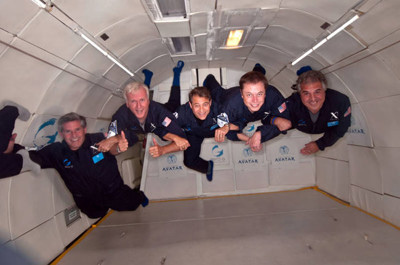 Weightlessness (n) The condition of experiencing no force of gravity, often observed in spaceUK: /ˈweɪtləsnəs/US: /ˈweɪtləsnəs/Learn more

Practice This Story
Continue learning with Ettip's stories and vocabulary challenges.
More English Stories About Space
A Night Under a Clear Sky
The night sky was filled with thousands of stars, and I could not stop looking up. I walked outside after dinner and felt the cool air on my face. The moon was bright and round, lighting up the field...
A Simple Look at the Solar System
The solar system is so large that light takes over eight minutes to travel from the Sun to Earth. It is made up of the Sun, eight planets, and many smaller objects such as moons and asteroids. The Sun...
What the First Photographs of a Black Hole Revealed
A black hole [cannot] be photographed, and yet in 2019 we did exactly that. What the Event Horizon Telescope revealed was never the hole itself, but the silhouette it carves in the incandescent gas or...
Why the Moon Always Shows Us the Same Face
The Moon has kept one face turned toward us for billions of years, like a dancer who never turns her back on the audience. This eternal sameness is not a coincidence but the result of a subtle gravita...