
What the First Photographs of a Black Hole Revealed
- English level
- Level 3
- Topic
- Space
- Estimated reading time
- 3 mins
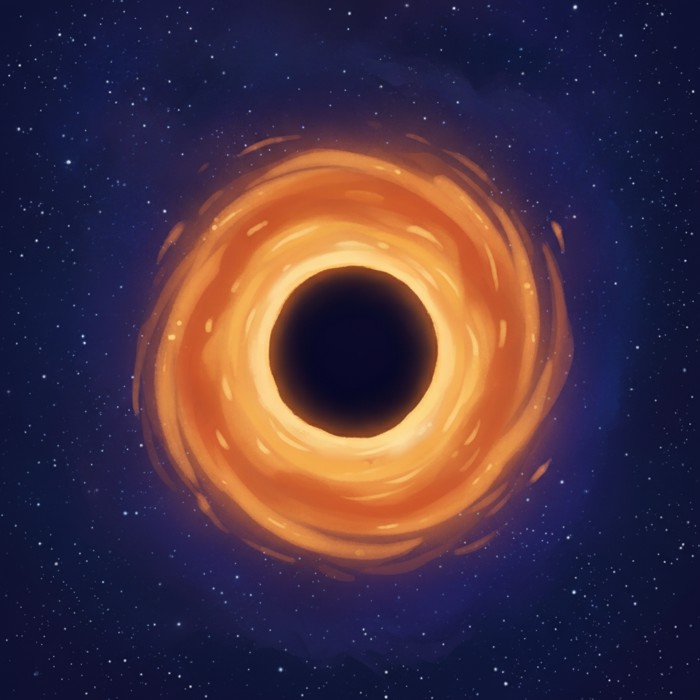
A black hole [cannot] be photographed, and yet in 2019 we did exactly that.
What the Event Horizon Telescope revealed was never the hole itself, but the silhouette it carves in the incandescent gas orbiting it.
The target, a monster at the heart of a galaxy called [Messier 87], sits fifty-five million light-years away and outweighs our [sun] by six billion times.
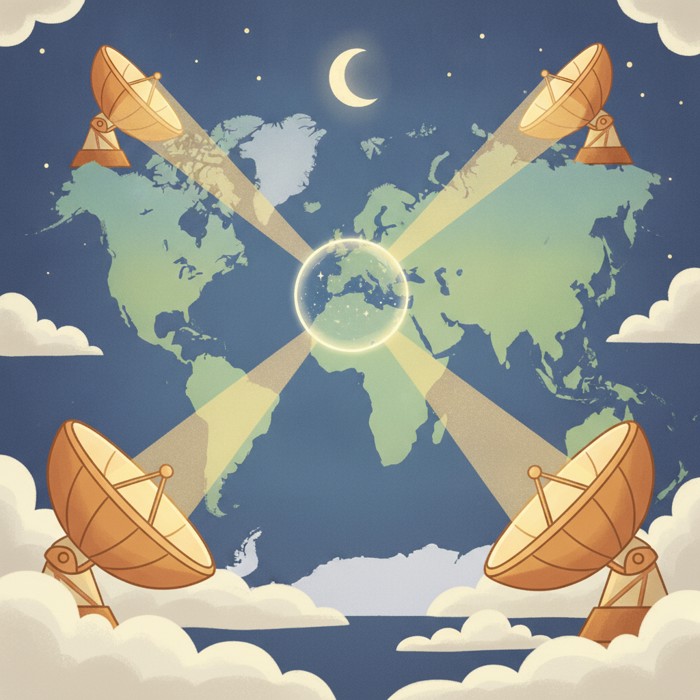
To resolve anything so tiny, astronomers linked radio dishes across four continents, effectively turning the whole [Earth] into a single telescope.
Ten nights of observation in 2017 filled hard drives that were physically flown around the world.
Reconstructing the picture took another two years, because an array of separate dishes samples only a fraction of the detail a camera takes for granted.
Algorithms had to guess at what was missing, and when two independent teams arrived at the same blurry orange ring, an educated guess hardened into evidence.
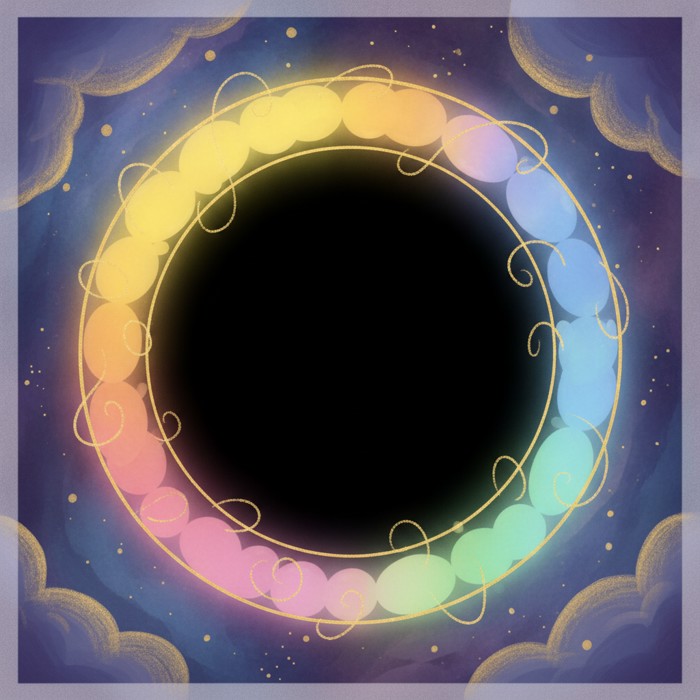
The ring itself is light bent into a circle by gravity, photons that would otherwise have escaped, grazing the edge of an absence.
It glows unevenly because gas spiralling toward us travels faster than gas drifting away, an effect known as [Doppler] beaming.
General relativity had predicted that diameter almost exactly, and the match was difficult to explain away.
Three years later came the harder assignment: [Sagittarius a]*]A*, the comparatively demure giant at the centre of our own galaxy, whose glow flickers over minutes rather than days.
A later image in polarised light traced magnetic field lines threading the rim, hinting at how such objects fling matter halfway across a galaxy.
The photographs, then, are less pictures than arguments, dense, contested and so far impossible to refute.
Looking at them, we watch gravity do something we had previously been asked to take on faith.
Key Vocabulary
 Array (n) An impressive display or range of a particular type of thing.UK: əˈreɪUS: əˈreɪLearn more
 Demure (adj) Behaving in a modest, quiet, and sometimes shy wayUK: /dɪˈmjʊə(r)/US: /dɪˈmjʊr/Learn more
 Evidence (n) The available body of facts or information indicating whether a belief or proposition is true or valid.UK: ˈevɪdənsUS: ˈevɪdənsLearn more
 Flickers (v) To shine or burn unsteadily, often with quick, slight movements, or to move quickly and lightlyUK: /ˈflɪkəz/US: /ˈflɪkərz/Learn more
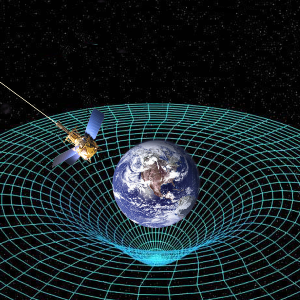 Gravity (n) The force that attracts a body towards the centre of the earth, or towards any other physical body having mass.UK: ˈɡrævətiUS: ˈɡrævətiLearn more
 Incandescent (adj) Emitting light as a result of being heated to a very high temperatureUK: /ˌɪnkænˈdesənt/US: /ˌɪnkænˈdesənt/Learn more
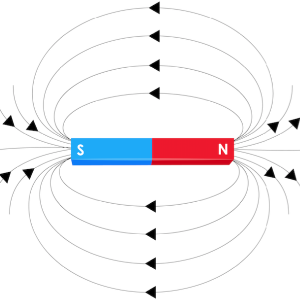 Magnetic (adj) Exhibiting or relating to magnetism.UK: mæɡˈnetɪkUS: mæɡˈnetɪkLearn more
 Photons (n) Tiny particles that are the basic units of light and other forms of electromagnetic radiationUK: /ˈfəʊtɒnz/US: /ˈfoʊtɑːnz/Learn more
 Polarised (adj) Divided into two strongly opposing groups or sets of opinions, often making agreement difficultUK: /ˈpəʊləraɪzd/US: /ˈpoʊləraɪzd/Learn more
 Relativity (n) The absence of standards of absolute and universal application.UK: ˌreləˈtɪvətiUS: ˌreləˈtɪvətiLearn more
 Silhouette (n) The dark shape and outline of someone or something visible in restricted light against a brighter background.UK: ˌsɪluˈetUS: ˌsɪluˈetLearn more

Practice This Story
Continue learning with Ettip's stories and vocabulary challenges.
More English Stories About Space
A Night Under a Clear Sky
The night sky was filled with thousands of stars, and I could not stop looking up. I walked outside after dinner and felt the cool air on my face. The moon was bright and round, lighting up the field...
A Simple Look at the Solar System
The solar system is so large that light takes over eight minutes to travel from the Sun to Earth. It is made up of the Sun, eight planets, and many smaller objects such as moons and asteroids. The Sun...
What Astronauts Eat, Wear and Miss in Orbit
Ask an astronaut what they miss most about [Earth], and the answer is rarely the view; It is usually a smell, a texture, or a food they took for granted. Life aboard the International Space Station re...
Why the Moon Always Shows Us the Same Face
The Moon has kept one face turned toward us for billions of years, like a dancer who never turns her back on the audience. This eternal sameness is not a coincidence but the result of a subtle gravita...