
Why the Moon Always Shows Us the Same Face
- English level
- Level 3
- Topic
- Space
- Estimated reading time
- 2 mins
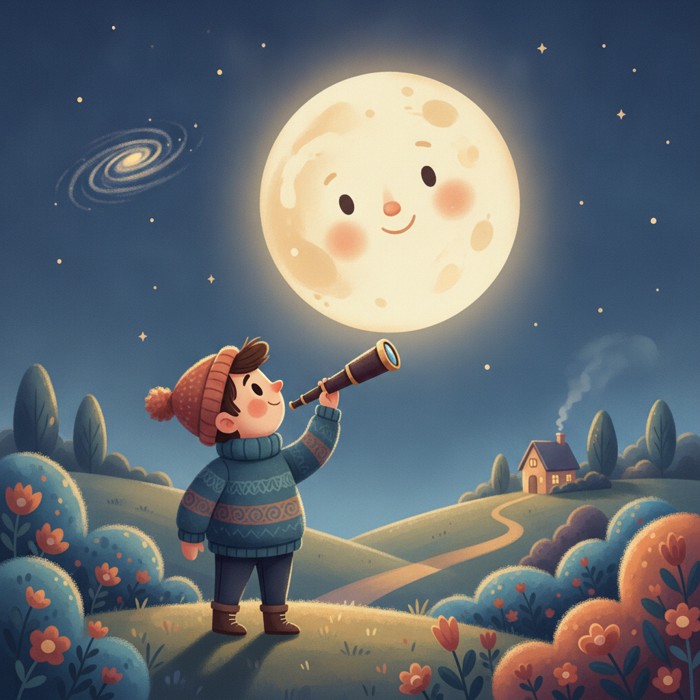
The Moon has kept one face turned toward us for billions of years, like a dancer who never turns her back on the audience.
This eternal sameness is not a coincidence but the result of a subtle gravitational negotiation.
The Moon rotates on its axis, but it does so at exactly the same rate as it orbits [Earth] - roughly 27.3 days per revolution.
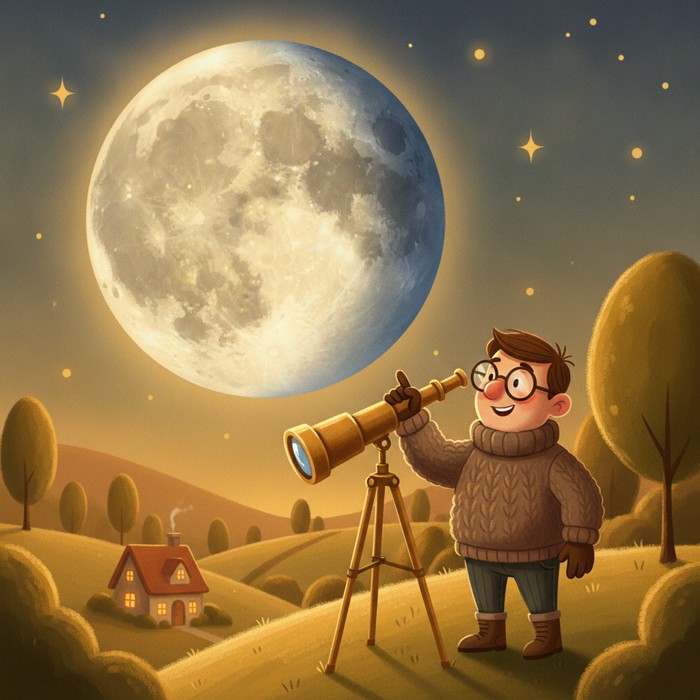
Because rotation and orbit are perfectly synchronized, the same hemisphere constantly faces us, and the far side remains hidden from any ground-based observer.
This phenomenon is called tidal locking, and it arises because Earth's gravity has been tugging on the [Moon's] shape for billions of years.
Early in its history, the Moon spun considerably faster, but gravitational forces raised subtle bulges in its body that acted like a brake.
Over hundreds of millions of years, those tidal bulges were dragged out of alignment, and the resulting torque gradually slowed the [Moon's] rotation to its present stately pace.
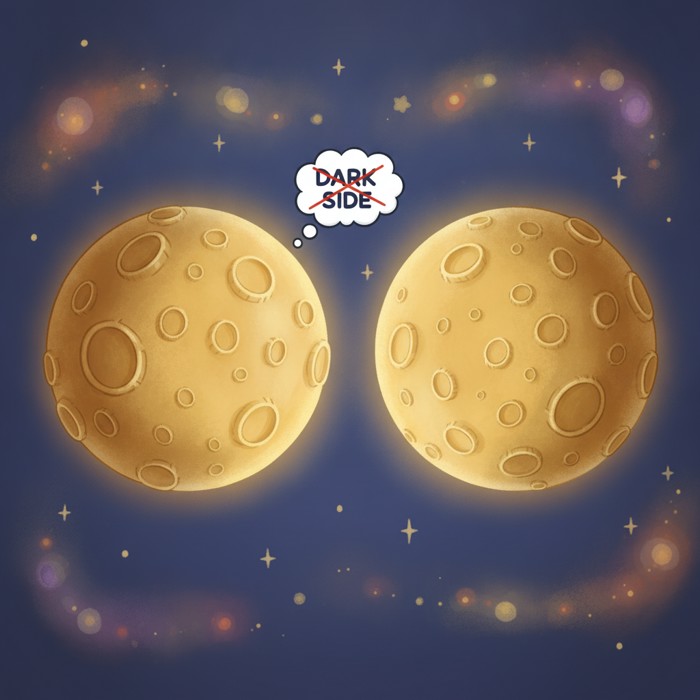
The far side is often mistakenly called the dark side, yet it receives just as much sunlight as the face we know.
Humans first saw it only in 1959, when the Soviet [Luna] 3 probe sent back grainy photographs of a terrain no eye had ever witnessed.
Strictly speaking, we see slightly more than half the lunar surface: the Moon wobbles gently as it travels, and this libration gradually reveals about 59 percent of the whole.
Nor is our satellite unusual - most large moons in the solar system are tidally locked to their planets, and [Pluto] and its companion [Charon] are locked to each other.
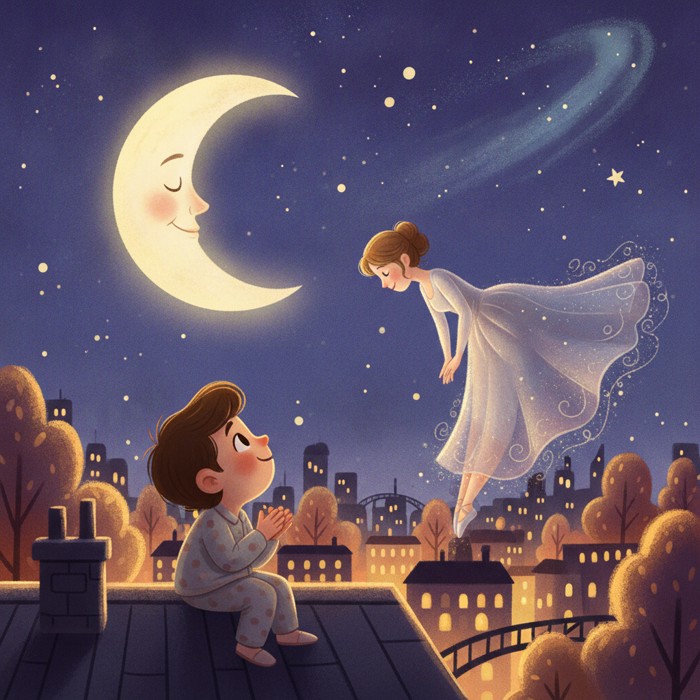
So the next time you glance up at that familiar face, know that it is not politeness keeping it turned toward you but four billion years of patient gravitational choreography.
Key Vocabulary
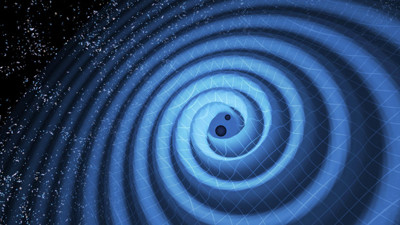 Gravitational (adj) Relating to the force of gravity, which pulls objects towards each otherUK: /ˌɡrævɪˈteɪʃənl/US: /ˌɡrævɪˈteɪʃənl/Learn more
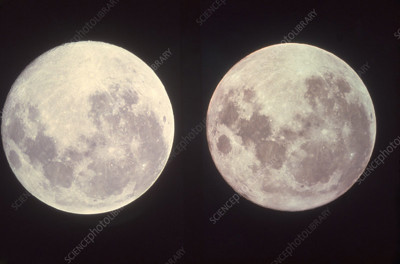 Libration (n) An apparent slow oscillation of a celestial body, like the moon, allowing more of its surface to be seenUK: /laɪˈbreɪʃn/US: /laɪˈbreɪʃn/Learn more
 Negotiation (n) Discussion aimed at reaching an agreement.UK: nɪˌɡəʊʃiˈeɪʃnUS: nɪˌɡoʊʃiˈeɪʃnLearn more
 Orbit (n) The curved path of a celestial object or spacecraft round a star, planet, or moon, especially a periodic elliptical revolution.UK: ˈɔːbɪtUS: ˈɔːrbɪtLearn more
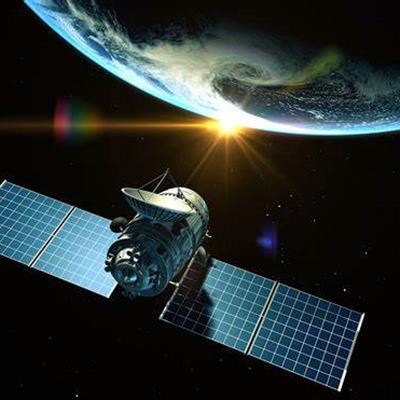 Satellite (n) An object, natural or man-made, that orbits a planet or other larger celestial bodyUK: ˈsætəlaɪtUS: ˈsætəlaɪtLearn more
 Terrain (n) A stretch of land, especially with regard to its physical features.UK: təˈreɪnUS: təˈreɪnLearn more
 Tidal (adj) Relating to or affected by the tideUK: /ˈtaɪdl/US: /ˈtaɪdl/Learn more
 Torque (n) It is a twisting force that causes an object to rotate around an axisUK: /tɔːk/US: /tɔːrk/Learn more

Practice This Story
Continue learning with Ettip's stories and vocabulary challenges.
More English Stories About Space
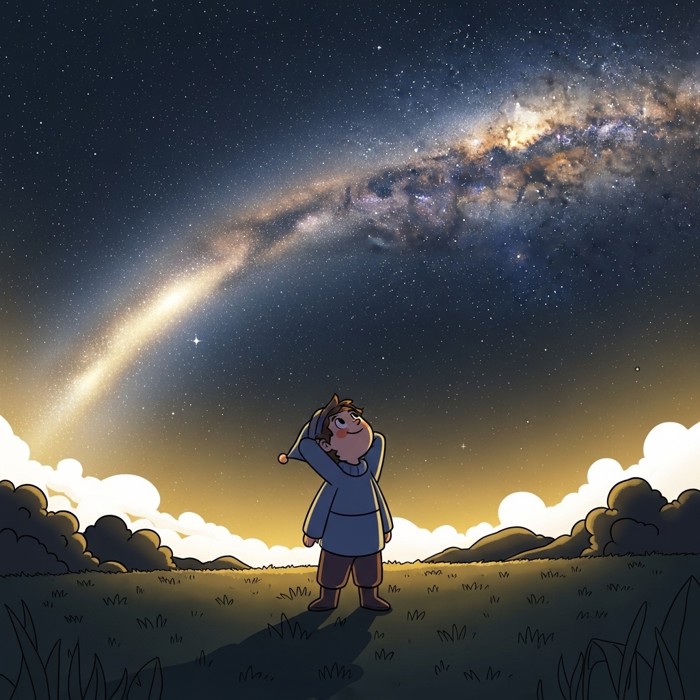
A Night Under a Clear Sky
The night sky was filled with thousands of stars, and I could not stop looking up. I walked outside after dinner and felt the cool air on my face. The moon was bright and round, lighting up the field...
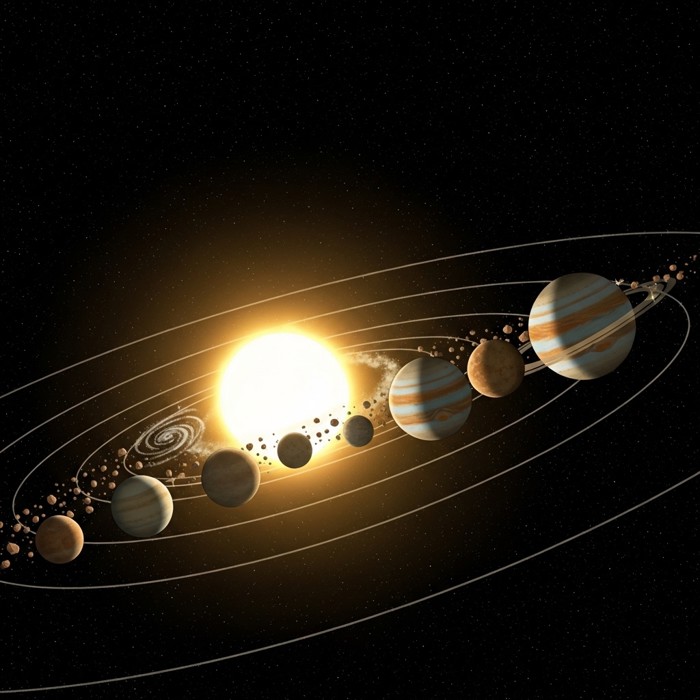
A Simple Look at the Solar System
The solar system is so large that light takes over eight minutes to travel from the Sun to Earth. It is made up of the Sun, eight planets, and many smaller objects such as moons and asteroids. The Sun...
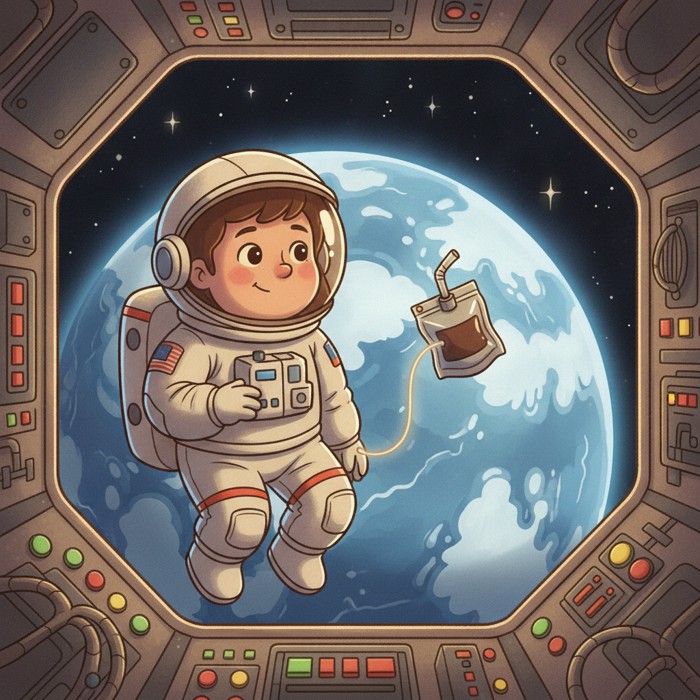
What Astronauts Eat, Wear and Miss in Orbit
Ask an astronaut what they miss most about [Earth], and the answer is rarely the view; It is usually a smell, a texture, or a food they took for granted. Life aboard the International Space Station re...
What the First Photographs of a Black Hole Revealed
A black hole [cannot] be photographed, and yet in 2019 we did exactly that. What the Event Horizon Telescope revealed was never the hole itself, but the silhouette it carves in the incandescent gas or...