
Stories about The Ocean
The Ocean is a topic that helps learners learn about the sea, marine animals, and underwater environments. It is an interesting topic for expanding vocabulary and talking about nature, sea life, and activities at sea.
Explore The Ocean vocabulary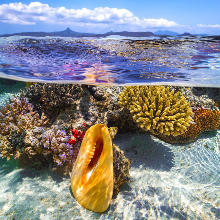
Stories about The Ocean
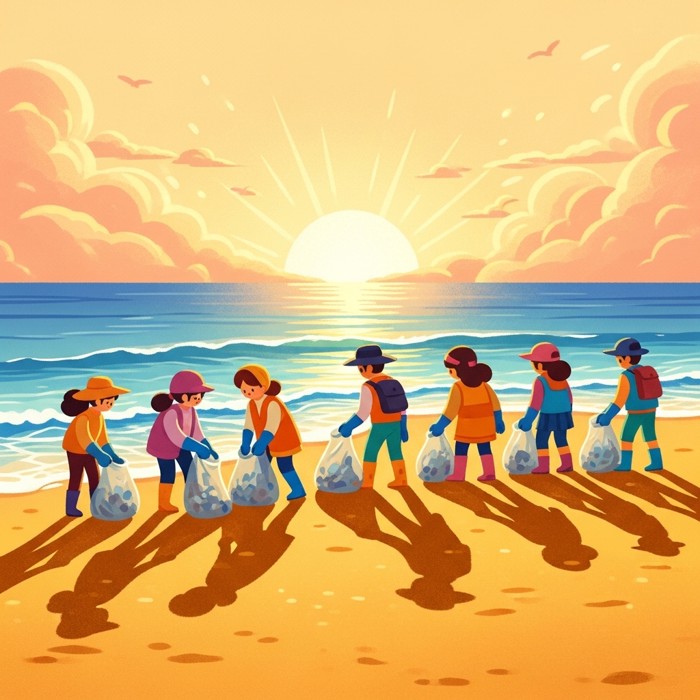
What Beach Cleanups Can Teach Us
Every year, millions of pieces of plastic wash up on beaches around the world. Beach [cleanups] are more than just picking up trash. They are powerful lessons about how humans affect the ocean. When v...
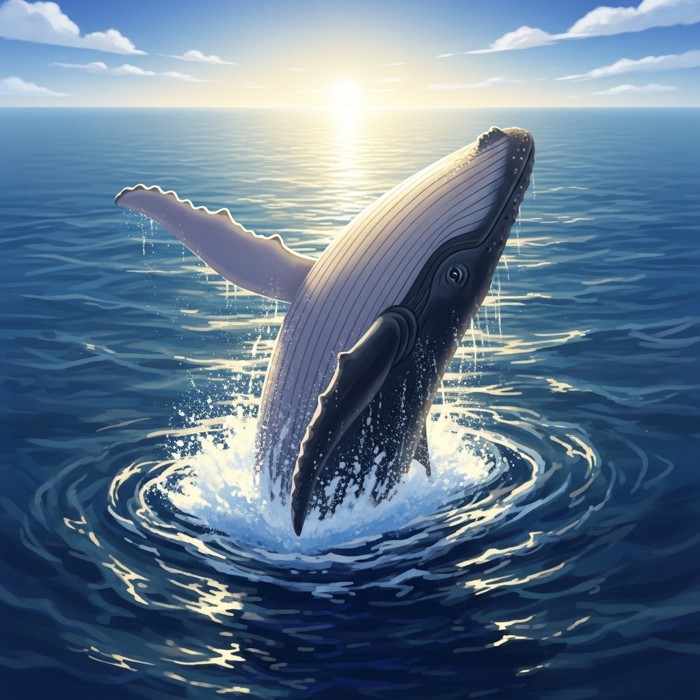
Why Whales Travel So Far
Every year, some whales swim thousands of miles across the ocean without stopping to rest. These incredible journeys are called migrations, and they are among the longest animal movements on Earth. Wh...
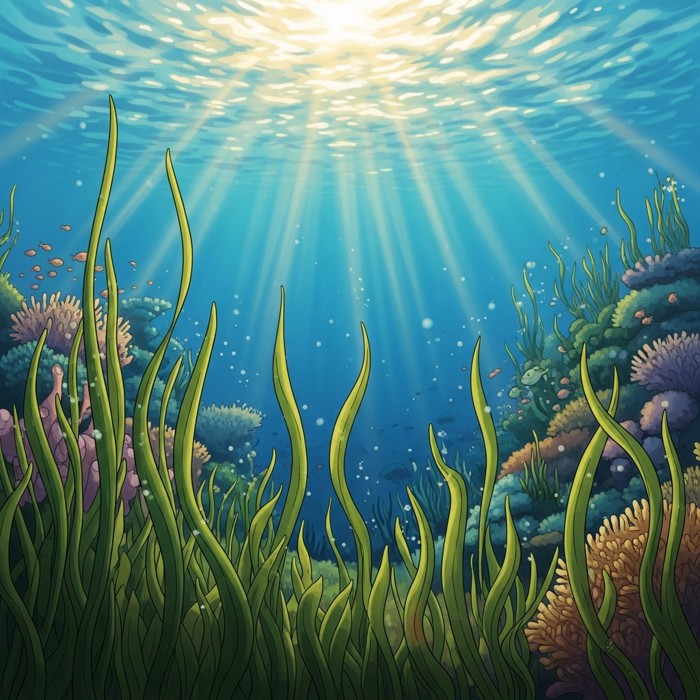
How Sea Plants Support Life
Did you know that sea plants produce more than half of the oxygen we breathe every day? Most people think of forests when they hear the word "oxygen," but the ocean plays an equally important role. Se...

Protecting the Ocean for the Future
The ocean covers more than 70 percent of our planet, but humans are slowly destroying it. We must take action now to protect the ocean for future generations. Every year, millions of tons of plastic w...
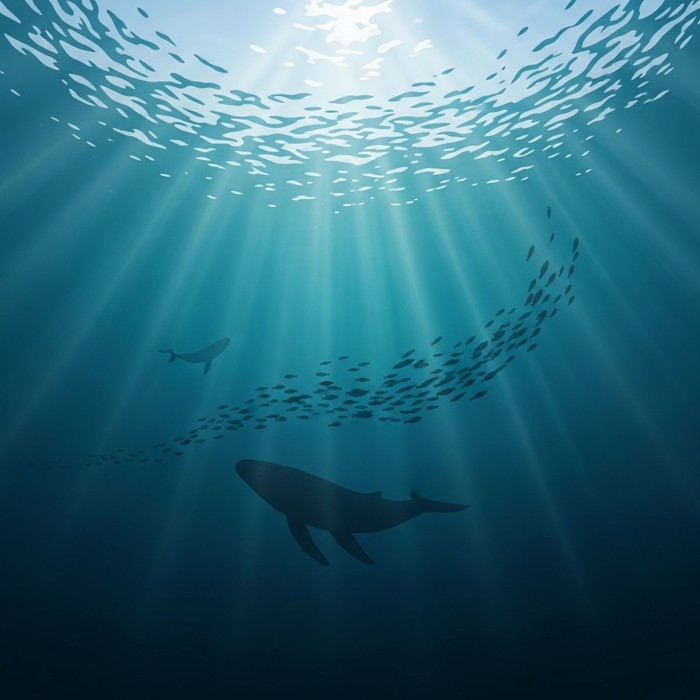
The Sound of Life Underwater
Most people think the ocean is a quiet place, but it is actually full of sound. Hundreds of different animals produce noises under the water every single day. Whales are famous for their long, beautif...
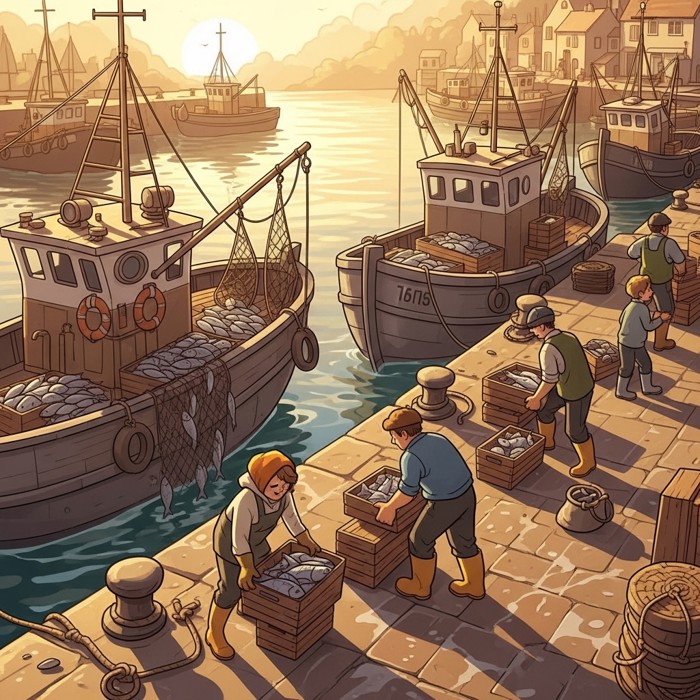
When the Sea Gives People Food
Every morning, fishing boats return to shore loaded with fish, shellfish, and other seafood. The ocean has fed people around the world for thousands of years. Billions of people depend on seafood as t...

Why Islands Depend on the Ocean
Islands are pieces of land completely surrounded by water, so the ocean shapes every part of island life. The ocean is the primary source of food for most island communities. Fishermen go out to sea e...
Story levels
- Level 2: 19 stories
Key Vocabulary
 Absorbs (v) Diligent, engrossed, attentive; attract attention, attract attentionUK: əbˈsɔːbzUS: əbˈzɔrbzLearn more
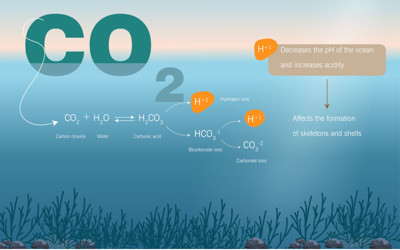 Acidification (n) This is the process of becoming acidic or making something acidicUK: /əˌsɪdɪfɪˈkeɪʃn/US: /əˌsɪdɪfɪˈkeɪʃn/Learn more
 Aquaculture (n) The rearing of aquatic animals or the cultivation of aquatic plants for food.UK: ˈækwəkʌltʃə(r)US: ˈɑːkwəkʌltʃərLearn more
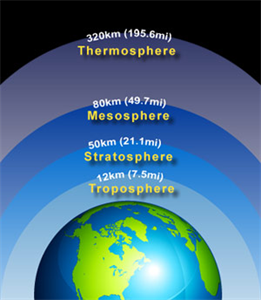 Atmosphere (n) The envelope of gases surrounding the earth or another planet.UK: ˈætməsfɪə(r)US: ˈætməsfɪrLearn more
 Attract (v) Cause to come to a place or participate in a venture by offering something of interest or advantage.UK: əˈtræktUS: əˈtræktLearn more
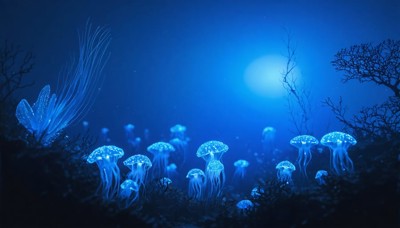 Bioluminescence (n) Light produced by living organisms, such as fireflies or some deep-sea fish, through a chemical reactionUK: /ˌbaɪəʊˌluːmɪˈnesns/US: /ˌbaɪoʊˌluːmɪˈnesns/Learn more
 Bleaching (n) The process of making something whiter or lighter, especially by chemical action or exposure to the sunUK: /ˈbliːtʃɪŋ/US: /ˈbliːtʃɪŋ/Learn more
 Borders (n) Edge, edge, seam, margin; border (to strengthen, to decorate)UK: ˈbɔːdəzUS: ˈbɔːdəzLearn more
 Boundaries (n) A line which marks the limits of an area; a dividing line.UK: ˈbaʊndərizUS: ˈbaʊndərizLearn more
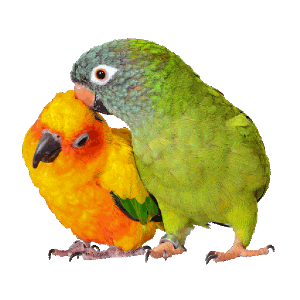 Breeding (adj) The mating and production of offspring by animals.UK: ˈbriːdɪŋUS: ˈbriːdɪŋLearn more
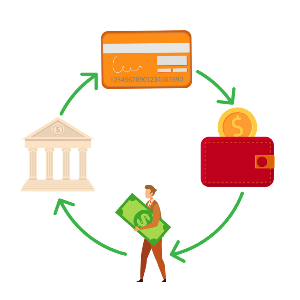 Circulation (n) The passing or spreading of something from one person or place to another (money)UK: ˌsɜːkjəˈleɪʃnUS: ˌsɜːrkjəˈleɪʃnLearn more
 Cliffs (n) Steep rocks, often at the edge of the sea or ocean, that rise vertically or almost verticallyUK: /klɪfs/US: /klɪfs/Learn more
Related topics
 FoodFood is a topic that helps learners learn about different foods, dishes, drinks, and ways to describe tastes. It is a familiar and useful topic for everyday situations such as eating, cooking, and ordering food.
 TravelTravel is a topic that helps learners talk about trips, destinations, transportation, and activities while traveling. It is useful for discussing travel plans, experiences, and places they have visited.
 FamilyFamily is a topic that helps learners learn vocabulary about family members and their relationships. It is a familiar and useful topic for talking about family, relatives, and everyday life.
 Daily RoutinesDaily Routines is a topic that helps learners talk about activities they do every day, such as waking up, having breakfast, going to school, or going to work. It is a familiar and useful topic for practicing how to describe daily schedules and everyday life.
 HomeHome is a topic that helps learners learn about rooms, household items, and activities that happen at home. It is a familiar and useful topic for describing a home, living spaces, and family life.
 Numbers & TimeNumbers & Time is a topic that helps learners practice numbers, telling the time, dates, and periods of time. These are essential vocabulary and skills for everyday communication.
 Information TechnologyInformation Technology (IT) is a topic that helps learners learn about computers, the Internet, software, and digital technologies. It is useful for talking about technology, work, communication, and how we use digital devices in everyday life.
 EducationEducation is a topic that helps learners talk about schools, subjects, teachers, and learning activities. It is a familiar and useful topic for discussing study, classrooms, and educational experiences.
 Workplace EnvironmentWorkplace Environment is a topic that helps learners talk about the workplace, coworkers, company culture, and activities at work. It is useful for communicating in professional settings and describing everyday work experiences.
 AnimalsAnimals is a topic that helps learners learn about the names, characteristics, and habitats of different animals. It is an interesting and familiar topic that helps learners expand their vocabulary and describe the natural world.
Love reading stories?
Join Ettip to practise with fun games, track your progress, and keep learning every day.