
Five Animals That Live Deep Underwater
- English level
- Level 2
- Topic
- The Ocean
- Estimated reading time
- 2 mins
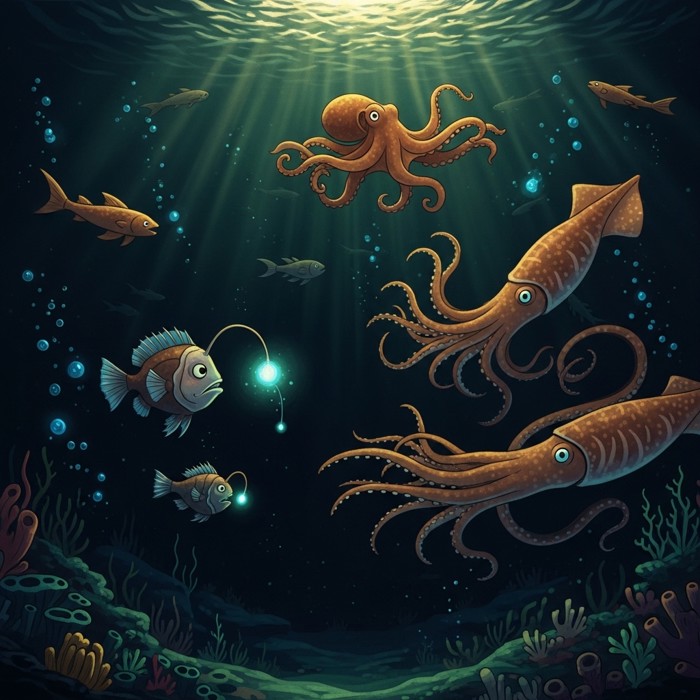
The deep ocean is one of the least explored places on our planet.
Scientists believe more than 80 percent of the ocean floor remains unknown to us.
One of the most famous deep-sea animals is the anglerfish.
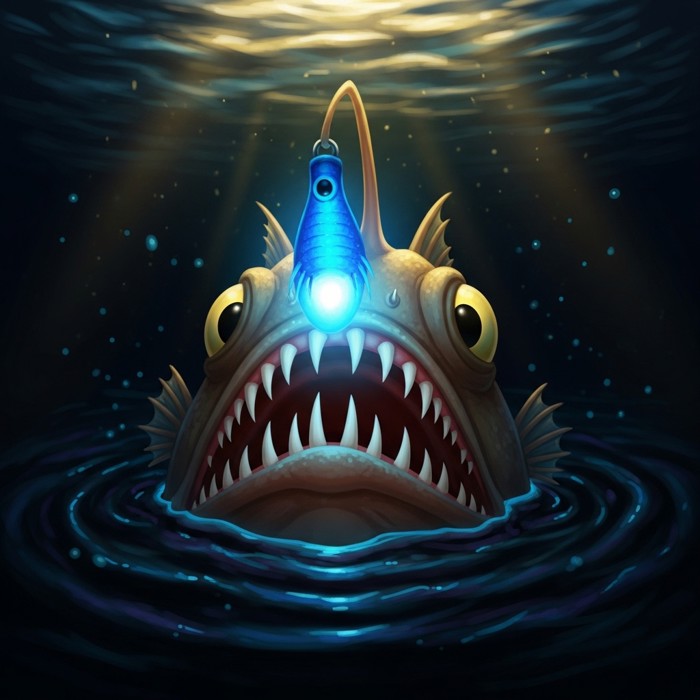
The anglerfish uses a glowing light on its head to attract prey in the dark water.
Another remarkable creature is the giant squid, which can grow up to 13 meters long.
The giant squid lives thousands of meters below the surface and is rarely seen alive.
The vampire squid is a small animal that looks like a mix between a squid and an octopus.
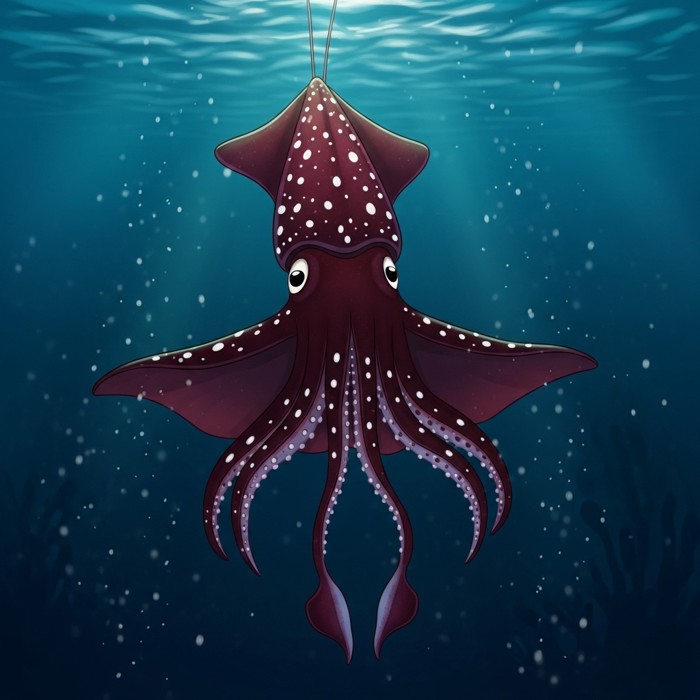
Despite its frightening name, the vampire squid feeds only on tiny particles of food floating in the water.
The [viperfish] is a deep-sea predator with long, sharp teeth that curve inward.
It swims at great speeds and catches other fish by using its teeth like a trap.
The [dumbo] octopus is named after its large fins, which look like the ears of the cartoon elephant [Dumbo].
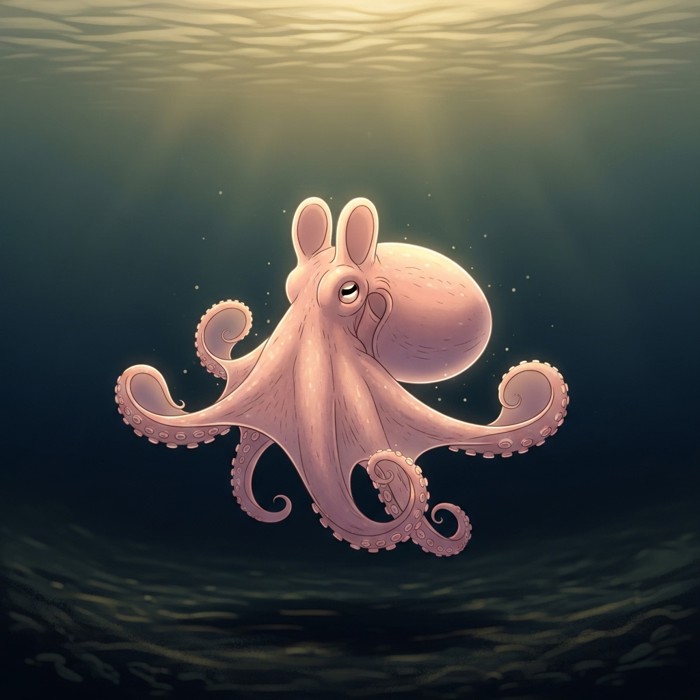
It moves slowly and gracefully through the cold, dark water near the ocean floor.
These five animals show how strange and wonderful life in the deep ocean can be.
Exploring the deep ocean helps scientists understand life on Earth and beyond.
Key Vocabulary
 Attract (v) Cause to come to a place or participate in a venture by offering something of interest or advantage.UK: əˈtræktUS: əˈtræktLearn more
 Creature (n) An animal, as distinct from a human being.UK: ˈkriːtʃə(r)US: ˈkriːtʃərLearn more
 Explore (v) Travel through (an unfamiliar area) in order to learn about it.UK: ɪkˈsplɔː(r)US: ɪkˈsplɔːrLearn more
 Frightening (adj) Making someone afraid or anxious; terrifying.UK: ˈfraɪtnɪŋUS: ˈfraɪtnɪŋLearn more
 Gracefully (adv) Moving or performing in a smooth, elegant, and controlled wayUK: /ˈɡreɪsfəli/US: /ˈɡreɪsfəli/Learn more
 Particles (n) (physics) particle, element; a piece, a small piece (of something)UK: ˈpɑːtɪklzUS: ˈpɑrtəkəlzLearn more
 Predator (n) An animal that naturally preys on others.UK: ˈpredətə(r)US: ˈpredətərLearn more
 Remarkable (adj) Worthy of attention; striking.UK: rɪˈmɑːkəblUS: rɪˈmɑːrkəblLearn more
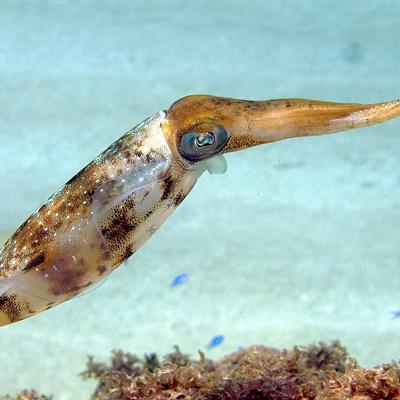 Squid (n) An elongated, fast-swimming cephalopod mollusc with eight arms and two long tentacles, typically able to change colour.UK: skwɪdUS: skwɪdLearn more
 Surface (n) The outside part or uppermost layer of something.UK: ˈsɜːfɪsUS: ˈsɜːrfɪsLearn more

Practice This Story
Continue learning with Ettip's stories and vocabulary challenges.
More English Stories About The Ocean

How Oceans Shape Life on Earth
More than seventy percent of our planet is covered by ocean. The ocean is a living system that shapes all life on Earth. Oceans produce more than half of the oxygen we breathe. Tiny plants called phyt...
A Day Beside the Sea
The sound of the waves washed over me the moment I reached the shore. I had always lived far from the sea, so this was a special day for me. The water stretched all the way to the horizon, blue and en...
How Waves Change the Shore
Waves never stop moving, and neither does the shore. Every day, waves push and pull sand, rocks, and water along the coastline. This constant movement slowly changes the shape of beaches and cliffs. W...
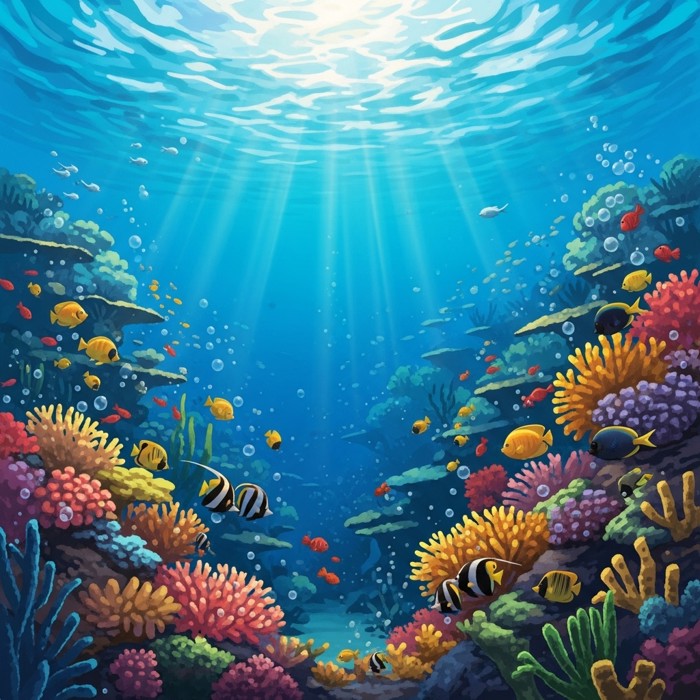
Why Coral Reefs Need Protection
Coral reefs cover less than one percent of the ocean floor, but they support about 25 percent of all marine life. These colorful underwater structures are some of the most important ecosystems on Eart...
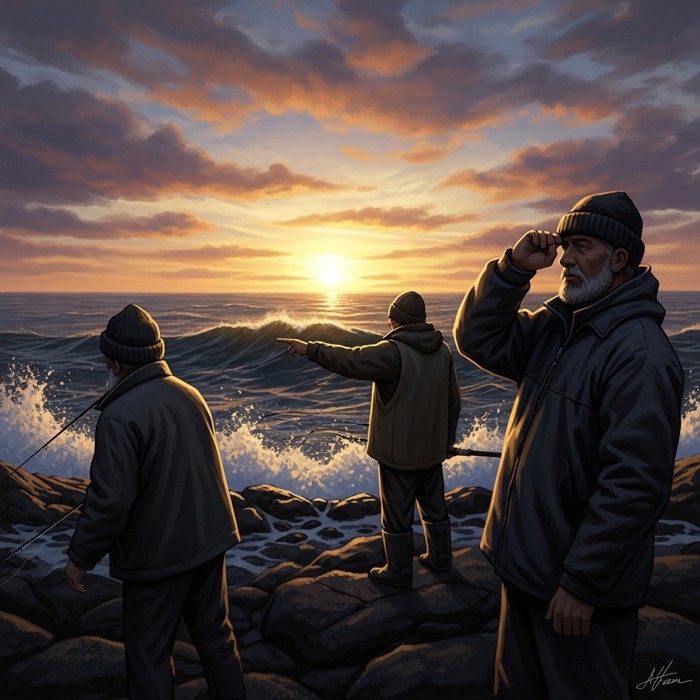
How Fishers Read the Ocean
Before sunrise, fishers stand at the shore and watch the ocean carefully. They are not just looking at water - they are reading signs that most people never notice. Experienced fishers can predict whe...
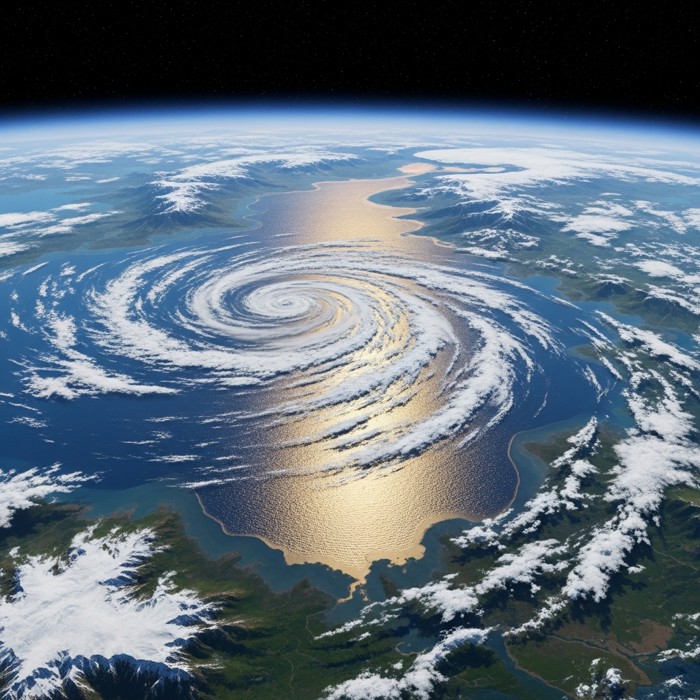
The Journey of Water Around Earth
The ocean covers more than seventy percent of Earth, and it drives one of the most important cycles in nature. Water is always moving - from the sea into the sky and back down to the ground again. Whe...
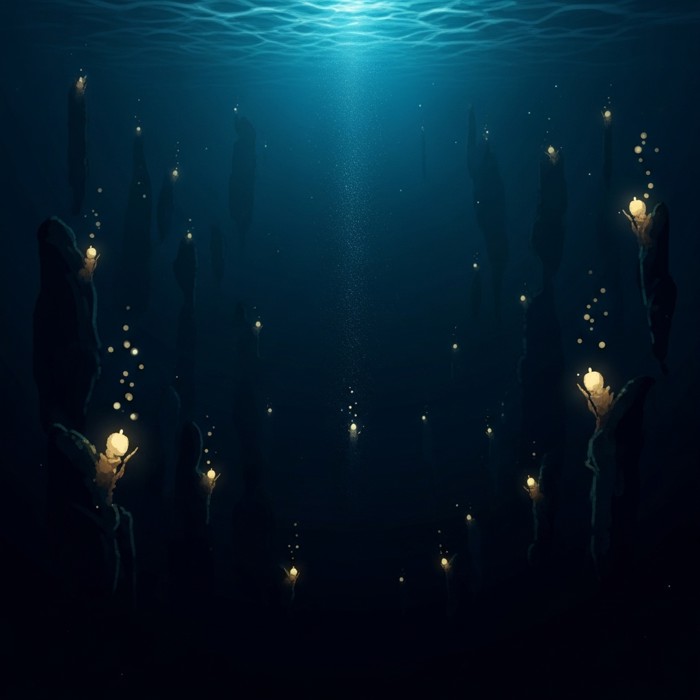
What Makes the Deep Ocean Mysterious?
The deep ocean covers more than half of Earth's surface, yet most of it remains completely unknown. Scientists have explored less than twenty percent of the ocean floor. The deeper you go, the darker...
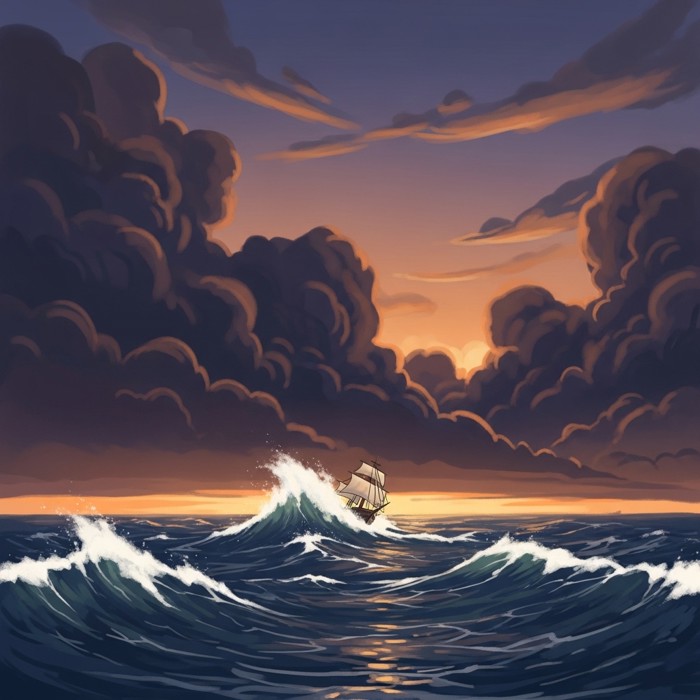
When Storms Begin at Sea
The sky turns a deep orange, and experienced sailors know something is coming. At sea, storms do not appear suddenly - they begin with quiet warnings. Warm air and cold air meet over the ocean, and th...
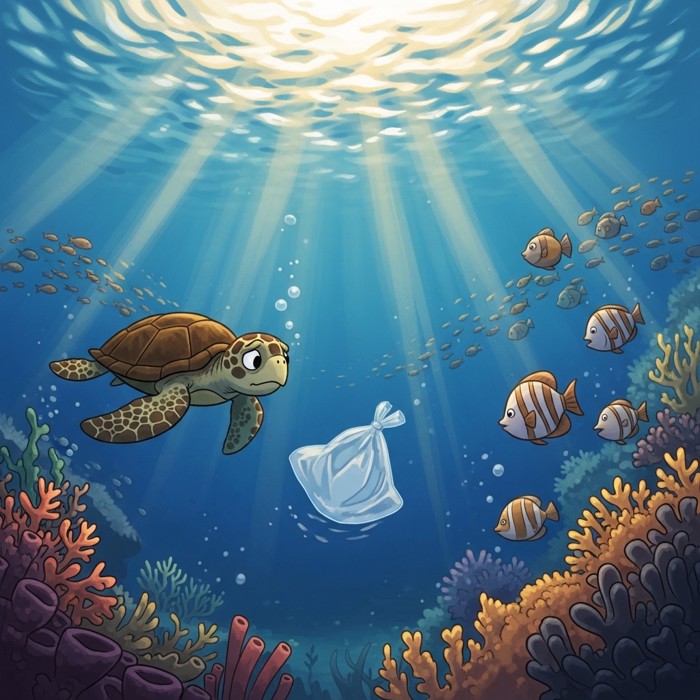
Why Plastic Hurts Sea Life
Every year, millions of tons of plastic enter the ocean. This plastic causes serious harm to sea life around the world. Plastic bags, bottles, and nets drift through the water for hundreds of years. S...
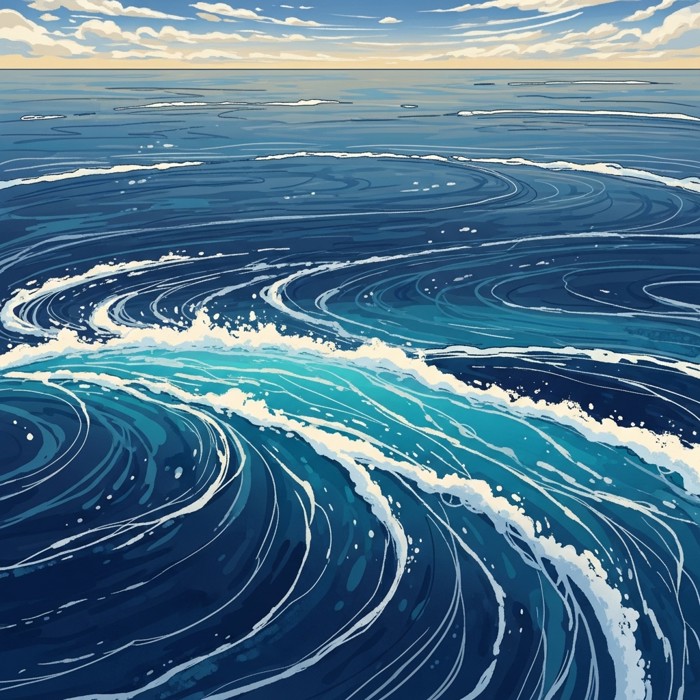
A Simple Look at Ocean Currents
Ocean currents move billions of tons of water around the world every single day. These currents act like a giant circulation system that keeps our [planet's] climate balanced. A current is a large, fl...